Why Teams Are Moving Away from Clay
Clay’s waterfall enrichment concept is genuinely clever. Chain dozens of data providers together, run contacts through a cascade of lookups, and let the system fill in gaps automatically. On paper, it solves the data fragmentation problem that plagues every outbound team.
In practice, most teams hit the same walls after a few months:
Credits vanish faster than expected. Every API call burns credits — including failed ones. Run a batch enrichment on 5,000 contacts and your actual spend ends up 2-3x higher than what you budgeted. The $149/month starter plan sounds reasonable until you’re buying credit top-ups every two weeks.
Data quality is only as good as the weakest source. Clay doesn’t produce data. It orchestrates third-party providers. If one source in your waterfall returns garbage, your entire output inherits that uncertainty. And good luck figuring out which source caused the bad record.
Compliance gets murky fast. When you’re pulling from 10+ sources through an orchestration layer, answering “where did this phone number come from?” becomes genuinely hard. That’s not a theoretical problem — it’s the first question a GDPR auditor asks.
Outside North America, coverage drops off a cliff. Most of Clay’s integrated providers are US-centric. If you’re selling into EMEA or APAC, the waterfall runs dry quickly.
The learning curve is steep. Clay is built for RevOps engineers who think in APIs and data flows. Hand it to an SDR and watch them struggle for weeks before producing anything useful.
None of this means Clay is bad. It means it’s a power tool with a specific audience. If you’re not that audience, there are better options in 2026.
The 5 Alternatives Worth Considering
After testing these platforms with real outbound campaigns over the past year, five tools stand out as genuine Clay replacements — each solving a different piece of the puzzle: Cognism, Apollo.io, Lusha, Lead411, and FullEnrich.
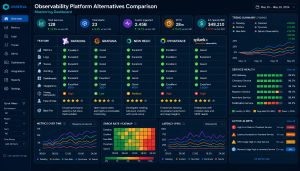
Here’s how they compare across what actually matters: data coverage, compliance clarity, cost predictability, and ease of use.
Cognism: Best for European Markets and Compliance-First Teams
Cognism takes the opposite approach to Clay. Instead of orchestrating third-party data, it produces its own — with human-verified mobile numbers and built-in compliance checks across 15 countries’ Do Not Call lists.
What makes it different
The GDPR compliance isn’t a checkbox feature. It’s baked into how data gets collected, verified, and served. Every phone number goes through a verification process before it enters the database. For teams selling into regulated industries or European markets, this removes an entire category of legal risk.
European data coverage is where Cognism genuinely outperforms everything else on this list. UK, Germany, France, Nordics — the hit rates on verified mobiles are significantly higher than what you’d get from Clay’s waterfall approach in these regions.
Pricing structure
Seat-based pricing with unlimited data access within your plan. No credits to burn through, no surprise overage charges. You know exactly what you’re paying each month regardless of how many enrichments you run.
The tradeoff
Zero customization. You can’t plug in your own data sources, build custom waterfalls, or create bespoke enrichment flows. Cognism gives you what it has, and that’s it. For teams that need flexibility, this feels limiting.
Best fit: B2B sales teams targeting European markets where GDPR compliance is non-negotiable. Enterprise orgs that need audit-ready data provenance.
Skip if: You need custom data orchestration or your entire TAM is in North America.
Apollo.io: Best Bang for Your Buck (With Caveats)
Apollo has quietly become the default starting point for outbound teams on a budget. The free tier is genuinely usable, paid plans start lower than Clay, and the platform bundles email sequences, a dialer, and basic CRM functionality into one tool.
What makes it different
The database is massive — over 270 million contacts as of mid-2026. More importantly, Apollo is an all-in-one platform. You prospect, enrich, sequence, and track all within the same interface. For a 5-person SDR team that doesn’t want to manage four different subscriptions, that consolidation matters.
Setup time is essentially zero. Sign up, search, export. No waterfall configuration, no API keys to manage, no workflow builder to learn.
The accuracy question
This is where Apollo gets controversial. Email accuracy is decent — most teams report 85-90% deliverability on verified emails. Mobile numbers are less consistent. Some verticals and regions show strong coverage; others are spotty. There’s no human verification layer like Cognism offers, so you’ll want to run your own validation pass on phone data before loading it into your dialer.
Pricing structure
Free tier: 10,000 credits/month (enough to test seriously). Basic plan: $49/user/month. Professional: $79/user/month with more credits and features. Compared to Clay’s credit-burning model, costs stay predictable.
Best fit: Budget-conscious teams focused on North American markets who want prospecting + outreach in one tool and can tolerate doing their own data validation.
Skip if: You need consistently accurate mobile numbers or you’re targeting EMEA heavily.
Lusha: Fastest Path from LinkedIn to Contact Info
Lusha does one thing and does it with almost zero friction: you’re on someone’s LinkedIn profile, you click the Chrome extension, and you get their email and phone number. That’s it.
What makes it different
The workflow is the simplest on this list. No setup, no waterfall configuration, no learning curve. Install extension, browse LinkedIn, click reveal. For SDRs who live inside LinkedIn Sales Navigator, Lusha fits into their existing workflow rather than asking them to learn a new one.
Data quality on emails is strong in North America and Western Europe. Mobile coverage is better than Apollo but doesn’t match Cognism’s verified numbers. The key difference from Clay: credits only burn on successful reveals. A failed lookup doesn’t cost you anything.
Pricing structure
Credit-based, but transparent. Free plan: 5 credits/month. Pro: $49/month for 160 credits. Premium: $79/month for 320 credits. One credit = one contact reveal, regardless of whether you pull email only or email + phone.
The limitation
Lusha is purely a lookup tool. No email sequences, no workflow automation, no intent data, no waterfall logic. It finds contact info and that’s where its job ends. You’ll need separate tools for everything else in your outbound stack.
Best fit: Individual SDRs and small teams who prospect primarily through LinkedIn and want the fastest possible path to contact details.
Skip if: You need bulk enrichment, workflow automation, or a full outbound platform.
Lead411: Trigger-Based Prospecting on a Budget
Lead411 differentiates on timing signals. Beyond basic contact data, it surfaces events: a company just raised funding, posted 12 new job openings, hired a new CTO, or expanded into a new market. These triggers turn cold outreach into warm outreach.
What makes it different
The trigger intelligence changes how you prioritize outreach. Instead of blasting 1,000 contacts and hoping for 2% response rates, you’re reaching out to 50 companies that just experienced a buying signal. The conversion math works differently when your timing is right.
Pricing is notably cheaper than both Clay and Cognism. The Unlimited plan removes export caps entirely — for teams doing high-volume prospecting, the per-contact cost drops to almost nothing.
Coverage and quality
Primarily North American. Mobile numbers in the US and Canada are solid. Step outside North America and coverage thins out quickly. Compliance standards exist but aren’t at Cognism’s level — no country-specific DNC checking, no human verification on mobiles.
Pricing structure
Basic Plus: $99/user/month with limited credits. Pro with Intent: $199/user/month. Unlimited: custom pricing but significantly cheaper per-contact than credit-based alternatives at scale.
Best fit: SMB sales teams focused on North America who want timing-based prospecting signals without enterprise pricing.
Skip if: You sell internationally or need GDPR-grade compliance documentation.
FullEnrich: Waterfall Done Right (Without the Complexity)
FullEnrich is the closest direct replacement for Clay’s core enrichment function. It runs waterfall logic across 15+ data providers, cascading through sources until it finds valid contact information. The difference: you don’t build the waterfall yourself.
What makes it different
Where Clay gives you the building blocks and says “figure it out,” FullEnrich gives you the result. Their waterfall sequences are pre-optimized for maximum find rates on emails and phone numbers. They manage the provider relationships, the fallback logic, and the deduplication.
Match rates typically beat what most teams achieve with self-built Clay waterfalls, because FullEnrich has spent years tuning the cascade order and provider selection for different regions and industries.
The provider pool includes Apollo, Hunter, Dropcontact, Lusha, and others — essentially the same sources you’d plug into Clay, but managed for you.
The tradeoff
FullEnrich only does enrichment. No email sequences, no CRM, no intent data, no workflow builder. It takes a list of names/companies in and gives you enriched contact records back. Everything else in your stack stays separate.
Pricing structure
Pay-per-enrichment model. Rates vary by volume tier, but typical costs land between $0.10-0.30 per successfully enriched contact. You only pay for results, not attempts — a meaningful difference from Clay’s “failed calls still burn credits” model.
Best fit: Teams that want Clay-level waterfall enrichment without building and maintaining the infrastructure themselves. Works well alongside other tools (pair it with Apollo for sequencing, for example).
Skip if: You want an all-in-one platform or you need real-time enrichment inside a larger workflow.
Head-to-Head Comparison
| Feature | Clay | Cognism | Apollo.io | Lusha | Lead411 | FullEnrich |
|---|---|---|---|---|---|---|
| Core strength | Data orchestration | Compliant data | All-in-one GTM | Quick lookups | Trigger signals | Waterfall enrichment |
| Data source | 3rd-party cascade | Own + verified | Own database | Own + partners | Own + triggers | 15+ sources managed |
| Europe coverage | Weak | Strong | Moderate | Moderate | Weak | Moderate |
| Compliance | Low transparency | High (GDPR/DNC) | Moderate | Moderate | Moderate | Moderate |
| Cost predictability | Low (credit burn) | High (per-seat) | High (free tier available) | Moderate (credits) | High (unlimited option) | Moderate (pay per result) |
| Setup complexity | High | Low | Low | Very low | Low | Low |
| Best for | RevOps engineers | EU-focused enterprise | Budget SMB teams | LinkedIn prospectors | Trigger-based selling | Enrichment-only needs |
| Starting price | $149/mo + credits | Custom (seat-based) | Free / $49/user/mo | Free / $49/mo | $99/user/mo | Pay per enrichment |
How to Pick the Right One
Forget feature lists for a moment. The decision comes down to three questions:
Where are your buyers? If they’re in Europe, Cognism wins on data quality and compliance alone. If they’re in North America, you have more options.
What’s your technical appetite? If your team has RevOps capacity and wants full control, Clay still makes sense. If you want something that works on day one without configuration, Apollo or Lusha gets you there faster.
What’s your actual budget? Not the sticker price — the real monthly spend including overages, add-ons, and credit top-ups. Clay’s $149 starting price is misleading when most active teams spend $500-800/month on credits. Apollo’s free tier or Lead411’s unlimited plan might deliver better ROI for volume-focused teams.
The Bottom Line
Clay’s problem isn’t capability — it’s that it pushes complexity onto the user. Building custom waterfalls is powerful if you have the skills and time. Most sales teams don’t.
The market in 2026 has matured past the “one tool to rule them all” mindset. The winning stack for most teams combines a primary data source (Cognism for EU, Apollo for NA) with a specialized enrichment layer (FullEnrich) and a workflow tool that fits their process.
Pick based on where your buyers are, how much setup time you’re willing to invest, and whether you need “flexible” or “just works.” The answer is usually simpler than it seems.
Related Reading
- 5 Clay Alternatives for B2B Data Enrichment in 2026 (Compared)
- 7 Best Botpress Alternatives for B2B SaaS Teams in 2026
Stay updated with our latest AI insights