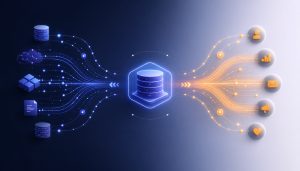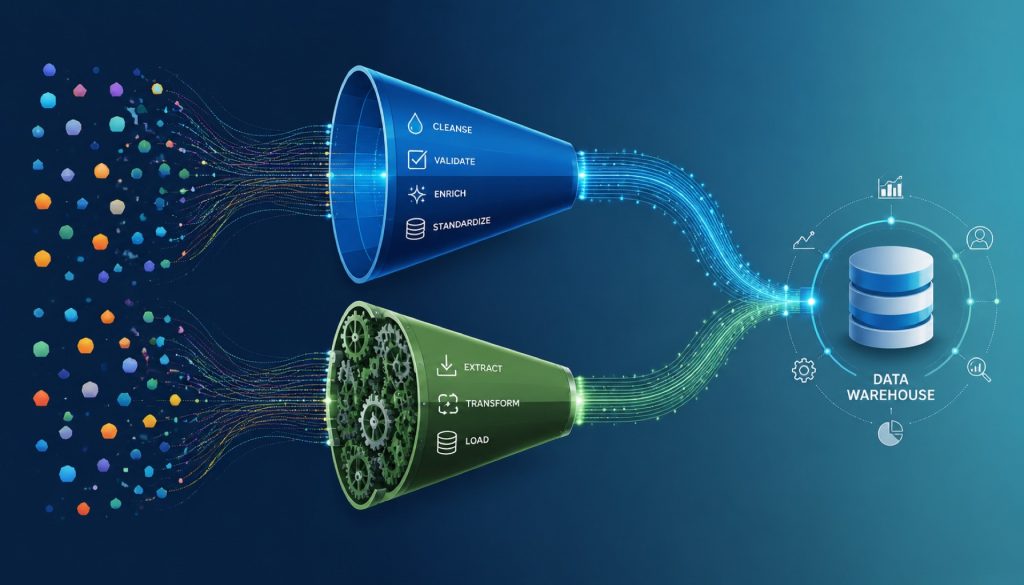
Customer data is messy by default. You collect events from websites, mobile apps, backend services, and a dozen SaaS tools, each with its own format, identifiers, and schema. Marketing wants that data in Facebook Ads. Product needs it in Amplitude. The data team insists everything lands in Snowflake.
A Customer Data Platform (CDP) solves this by collecting data from all sources, normalizing it, and routing it wherever it needs to go. Two platforms dominate this space: Segment, the incumbent acquired by Twilio for $3.2 billion in 2020, and RudderStack, the open-source challenger promising the same capabilities at a fraction of the cost.
The real question comes down to this: do you pay for Segment’s polished experience and plug-and-play simplicity, or do you pick RudderStack, roll up your sleeves, and keep both your budget and your data under your own control? This guide breaks it down by data volume, budget, and engineering resources so you can make the right call.
Quick Comparison
| Dimension | Segment | RudderStack |
|---|---|---|
| Pricing Model | From $120/mo (10K MTU), scales steeply | Free (open-source) or $750/mo (5M events) |
| Integrations | 400+ destinations | 200+ destinations |
| Data Sovereignty | Cloud-only, data passes through Segment servers | Self-host or cloud-hosted (you own the infra) |
| Technical Complexity | Low: no-code setup, plug and play | Medium-high: self-hosting requires Docker/K8s |
| Best For | Small teams with budget, optimizing for speed | High-traffic products, teams with data engineers |
| Real-Time Performance | Strong for tool destinations, warehouse syncs lag 1-4 hours | Excellent: warehouse-native, minute-level freshness |
Pricing: Where the Real Difference Lives
This is the crux of the competition.
Segment charges by Monthly Tracked Users (MTU), meaning any unique visitor or identified user within a calendar month. The Team plan starts at $120/month for 10K MTU, which sounds reasonable. But once you cross 50K MTU, pricing jumps sharply. Companies routinely report paying $2,000 to $5,000 per month at moderate scale, and north of $25,000 per month at enterprise-level traffic.
The MTU model penalizes growth directly. Every new user adds cost. If you are building a consumer app or running a high-traffic site, costs compound fast. One SaaS founder on Reddit mentioned their Segment bill hit $8,000 per month when active users passed 100K, more than their AWS spend.
RudderStack takes a different approach. The open-source version is completely free. You deploy it on AWS, GCP, or your own servers and pay only for infrastructure, typically $200 to $500 per month depending on scale. There is no per-user or per-event vendor fee.
For teams that prefer not to manage infrastructure, RudderStack offers a cloud-hosted plan starting at $750/month for 5 million events. No MTU headaches, just straightforward event-volume pricing. For context, 5 million events might represent 50K to 100K active users depending on your tracking density. That is already cheaper than Segment at comparable scale.
A concrete example: a B2B SaaS company with 200K monthly visitors and 50K identified users would pay roughly $3,000 to $5,000 per month on Segment. On RudderStack Cloud (assuming 10 to 15 million events per month), they would pay around $1,500 to $2,000. Self-hosting drops that further to $500 to $800 in infrastructure costs.
Companies like Kajabi have reported six-figure annual savings after migrating from Segment to self-hosted RudderStack. Aircall cut costs by 35% after switching to RudderStack Cloud.
The breakeven point: if you track more than 20K MTU and have some engineering capacity, RudderStack starts looking very attractive financially.
Integration Ecosystem: Breadth vs Depth
Segment wins on raw numbers with over 400 integrations covering everything from niche marketing tools to enterprise data warehouses. They have been building since 2011, so they have had time to add support for obscure platforms that marketing teams might randomly request.
Segment’s integrations also come with detailed documentation. Each one has a setup guide, troubleshooting docs, and community threads. When something breaks (and it will), you can find answers quickly.
RudderStack offers 200+ integrations, which sounds like less but covers roughly 90% of what most teams actually use: Google Analytics, Facebook Ads, Amplitude, Mixpanel, Salesforce, HubSpot, and all the major warehouses (Snowflake, BigQuery, Redshift, Databricks).
Where RudderStack pulls ahead is the quality of its warehouse integrations. The platform is warehouse-native by design, meaning it optimizes for getting data into warehouses quickly and with clean schemas. Segment treats the warehouse as “just another destination.” RudderStack treats it as the primary destination.
RudderStack also benefits from an active open-source community contributing connectors. Need a custom integration? You can build it yourself, or hire their team to build it. With Segment, you wait for them to prioritize it (or pay enterprise rates for custom development).
The bottom line: if you need a long-tail integration for some obscure ad network, Segment probably has it. If your priority is getting clean data into your warehouse, RudderStack usually delivers a better experience.
Data Sovereignty and Compliance
This matters a great deal for companies in regulated industries.
Segment is cloud-only. Every event you send flows through Segment’s servers before reaching its destination. They buffer it, process it, then forward it. For most companies, this is fine. But if you operate in healthcare (HIPAA), finance (SOX, PCI), or serve European customers (GDPR), you may run into problems.
Even with Segment’s Business plan and a BAA (Business Associate Agreement), your data still touches their infrastructure. Some compliance officers are uncomfortable with this arrangement. Certain data protection laws require you to know exactly where data goes and how long it persists.
RudderStack offers self-hosting. Data flows from your sources through infrastructure you control, directly to its destinations. It never touches RudderStack’s servers. For companies with strict data residency requirements (for example, “all data must stay in the EU”), this is the only viable option among CDPs.
RudderStack Cloud (the managed version) does process data through their systems, but offers more granular control: choose your region, configure retention policies, and get detailed audit logs. The platform was built by data engineers who understand compliance, and their documentation actually explains how to handle PII masking, consent management, and user deletion requests.
A practical example: a European fintech startup chose RudderStack specifically because their legal team would not approve Segment. They needed to prove data never left the AWS Frankfurt region. With RudderStack self-hosted, they achieved that.
Technical Complexity: Plug-and-Play vs DIY
Segment setup is remarkably simple. Create an account, drop a JavaScript snippet on your site, and start sending data. Want to add a new destination? Click a button, enter the API key, done. No infrastructure to manage, no servers to configure, no Docker to learn.
This is Segment’s biggest advantage. You can get data flowing from your website to Google Analytics, Facebook, and a data warehouse in under an hour. For small teams without a dedicated data engineer, that speed matters enormously.
RudderStack self-hosting requires real engineering capability. You need to deploy the RudderStack server (Docker or Kubernetes), set up a PostgreSQL database for metadata, configure object storage (S3 or GCS for event buffering), set up monitoring and alerting, and handle updates and scaling. If your team already runs containerized workloads and has DevOps experience, this is straightforward. But if you are a 5-person startup where everyone wears multiple hats, the overhead can be painful.
RudderStack Cloud (their managed offering) eliminates this problem. It is as easy to set up as Segment: create an account, install the SDK, configure destinations. You lose some control compared to self-hosting but retain the cost advantages and data flexibility.
Who can handle self-hosting? If you have at least one person comfortable with Docker, Terraform, and AWS, you are fine. If the idea of setting up a Kubernetes cluster makes you nervous, stick with Segment or RudderStack Cloud.
Real-Time Performance and Data Quality
Both platforms handle real-time data streaming, but they prioritize differently.
Segment has historically performed well at forwarding events to real-time destinations like Facebook Ads, Google Analytics, and Amplitude. Their architecture was built around low-latency routing, and events typically reach downstream tools within seconds.
However, Segment’s warehouse syncs are slower. Depending on your plan, data lands in your warehouse every 1 to 4 hours. For teams building real-time dashboards or operational analytics, that lag is a problem.
RudderStack is warehouse-first. They optimize for getting data into your warehouse as fast as possible, usually within minutes. If your data team lives in SQL and wants to build analytics on fresh data, this is a significant advantage.
RudderStack also provides real-time event streaming to other destinations, with performance comparable to Segment. The difference is typically seconds, not minutes.
On transformations: both platforms let you transform data in transit (cleaning event names, enriching with additional attributes, filtering PII). Segment runs transformations in their cloud. RudderStack lets you write transformations in JavaScript or Python that you can test locally before deploying, giving you more flexibility for custom business logic.
When Segment Is the Right Choice
Segment makes sense when your team is small (under 10 people) with no data engineer, and you need something that works out of the box. Your time is worth more than the $200 to $500 per month you would save with RudderStack.
It also fits well if you are pre-product-market-fit and iterating fast. When you are testing new tools every week, Segment’s 400+ integrations and plug-and-play setup save hours. At low data volume (under 10K MTU), Segment costs $120 per month and RudderStack may not justify the setup overhead.
If you depend on a specific niche integration that only Segment supports, check both catalogs first, but Segment’s longer history means broader coverage for obscure tools. And if your team has zero interest in managing infrastructure, paying for convenience is a legitimate choice.
When RudderStack Is the Right Choice
RudderStack becomes compelling once you hit high data volume (over 50K MTU or 5 million events per month). At that scale, the pricing advantage becomes massive, saving you $2,000 to $10,000 per month compared to Segment.
It is also the better pick if you have at least one data engineer or DevOps person who can manage infrastructure (for self-hosting) or configure the cloud version effectively. For regulated industries with data sovereignty requirements, European companies with GDPR concerns, or anyone who needs to prove data never left their infrastructure, RudderStack is often the only option.
Teams building on a data warehouse foundation (Snowflake, BigQuery, Redshift) benefit from RudderStack’s warehouse-native approach: cleaner schemas, faster sync times, and better support for tools like dbt. If you want customization and control, the ability to write custom transformations or modify how destination connectors work, the open-source model lets you fork and adapt.
Finally, if you are cost-sensitive and growing aggressively, RudderStack scales more predictably. Startups with ambitious growth targets frequently hit a pricing wall with Segment.
Migrating from Segment to RudderStack
The most common migration path is Segment to RudderStack, driven primarily by cost.
A typical story: “We started on Segment’s $120 per month plan. Two years later we were paying $6,000 per month, and it had become our third-largest cloud bill behind AWS and Snowflake. We migrated to self-hosted RudderStack and now pay $600 per month in infrastructure.”
RudderStack was intentionally designed for Segment compatibility. They support similar SDK methods and event schemas. For a basic setup, migration takes 1 to 2 weeks: deploy RudderStack infrastructure, swap the Segment SDK for the RudderStack SDK (often a one-line change), reconfigure destinations in RudderStack’s UI, run both in parallel for a week to validate data, then cut over and shut down Segment.
Things get trickier if you use Segment Personas (their identity resolution product) or Protocols (data quality features). RudderStack has equivalent functionality, but the mapping is not one-to-one. Budget extra time for testing those components.
RudderStack provides migration guides, and on enterprise plans, their team offers hands-on migration support.
Final Verdict
There is no universal “best” here. It depends on your stage, budget, and team capabilities.
Early-stage startups should probably start with Segment. Get to market fast, validate the product, and do not overthink infrastructure. When your Segment bill reaches $1,000 to $2,000 per month and you have data people on the team, reassess.
Growth-stage companies (Series A/B, 50+ people, dedicated data team) should seriously evaluate RudderStack. The cost savings compound quickly, and you are at a stage where data quality and warehouse integration matter more than adding random marketing tools.
Enterprises can go either way. Segment offers premium support and proven reliability at scale. RudderStack offers cost control and data sovereignty. If you are in a regulated industry or processing millions of events daily, RudderStack’s economics tend to win.
The smart move? Try both. RudderStack has a free tier (10K events per month on Cloud, unlimited on self-hosted). Segment has a free tier (1,000 MTU per month). Set up parallel tracking for a week, compare the experience, and make your decision based on real data rather than marketing copy.
Your CDP will be core infrastructure for the next several years. Choose based on where you will be in 2 to 3 years, not where you are today. If you are betting on growth, bet on a pricing model that scales with you rather than against you.
Related Reading
- Segment vs RudderStack: Which CDP Should You Choose in 2026?
- mParticle vs RudderStack: Which CDP Is Right for Your Team in 2026?
Stay updated with our latest AI insights