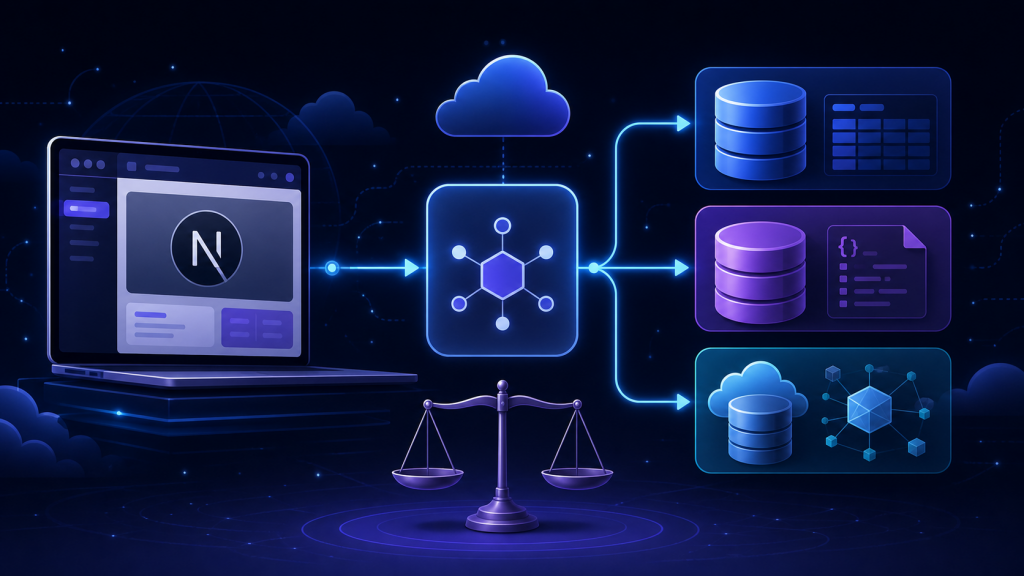
TL;DR: For Next.js 14+ with App Router, go with Neon if you’re on Vercel, Supabase if you need auth/storage/realtime in one package, or Turso if you need sub-50ms global reads. Skip PlanetScale unless you’re migrating from MySQL.
Why Traditional Databases Don’t Cut It Anymore
Next.js 14’s App Router pushes server-side rendering to the extreme, but database selection has become the new bottleneck.
Traditional RDS instances run out of connection pools, suffer from cold starts, and waste money on hourly billing. Serverless databases promise pay-per-use pricing, infinite scaling, and edge optimization—but there are too many options, with overlapping features yet distinct trade-offs. Supabase calls itself “open-source Firebase,” Neon pitches “separated storage and compute,” PlanetScale says “MySQL without migrations,” and Turso promises “distributed SQLite.”
This article tests 5 mainstream solutions across cold start latency, edge deployment compatibility, pricing transparency, and ecosystem maturity to find the best fit for Next.js projects.
1. Supabase: Full BaaS Stack, Not Just a Database
What it is: PostgreSQL + Auth + Storage + Realtime + Edge Functions. Essentially an open-source Firebase alternative.
Why it works for Next.js:
- Server Components friendly: Direct SQL via
@supabase/supabase-jswithout connection pooling headaches - Auth built-in: No need to wire up NextAuth separately—OAuth, magic links, and JWTs work out of the box
- RLS (Row Level Security): Write database policies once, skip middleware authorization checks
Edge story: Supabase Edge Functions run on Deno, separate from the database. If you deploy Next.js to Vercel Edge, you’ll hit cross-region latency (~50-150ms) unless you self-host.
Pricing: Free tier gives you 500MB database + 1GB file storage + 2GB bandwidth. Paid starts at $25/month. Watch out: RLS queries can rack up CPU credits fast if your policies are complex.
Who should pick Supabase: Solo developers or small teams building a full-stack app who want auth, storage, and database in one place without juggling multiple services.
2. Neon: The Vercel-Native Choice
What it is: PostgreSQL with separated storage and compute. Compute auto-scales to zero when idle, storage persists independently.
Why it works for Next.js:
- True serverless PostgreSQL: Scales to zero in seconds, wakes up in <100ms
- Branching: Create a database branch for every Vercel preview deployment—test schema changes in isolation
- Connection pooling baked in: No need for PgBouncer or Supavisor
Edge story: Neon’s HTTP API works with Vercel Edge Runtime. Not as fast as native TCP, but good enough for most use cases (~30-80ms from edge to database).
Pricing: Free tier: 0.5GB storage + 100 compute hours/month. Pro starts at $19/month. The killer feature is branching—no extra cost for ephemeral preview databases.
Who should pick Neon: Teams already on Vercel who want seamless preview environments and don’t need auth/storage/realtime extras.
3. PlanetScale: MySQL Without Migration Pain
What it is: Serverless MySQL built on Vitess (YouTube’s database infrastructure). The hook is branching + non-blocking schema changes.
Why it works for Next.js:
- No downtime migrations: Create a branch, change schema, test, merge—zero-downtime deploy
- Prisma-friendly: Best-in-class Prisma integration, better than any PostgreSQL option
- Connection pooling included: No need to configure anything
Edge story: PlanetScale has global read replicas, but latency from Vercel Edge to PlanetScale can still hit 80-150ms depending on region.
Pricing: Hobby tier is free (1 database, 1GB storage, 1 billion row reads/month). Scaler starts at $39/month.
Reality check: PlanetScale announced in 2024 they’re killing the free tier for new signups and removing the branching feature from non-enterprise plans. If you’re starting fresh, you’re better off with Neon or Supabase unless you’re already deep in the MySQL ecosystem.
Who should pick PlanetScale: Teams migrating from MySQL who need schema branching and can stomach the enterprise pricing.
4. Turso: SQLite Goes Distributed
What it is: libSQL (SQLite fork) with multi-region replication. Think “SQLite but you can write once and read everywhere.”
Why it works for Next.js:
- Sub-10ms reads: Data replicates to 20+ edge locations, reads are local
- Embedded replica mode: Run a SQLite file in your Vercel function, sync changes in background
- Drizzle ORM support: Best-in-class TypeScript ORM integration
Edge story: This is where Turso shines. Writes go to primary (50-150ms), but 95% of queries are reads, and those are <20ms from any edge location.
Pricing: Free tier: 9GB storage + 500 databases. Paid starts at $29/month for additional storage/replicas.
Gotchas: SQLite’s type system is looser than PostgreSQL. If you’re used to strict schemas, you’ll need to adjust. Also, no native full-text search like PostgreSQL’s tsvector.
Who should pick Turso: Apps with global users who need fast reads everywhere and can tolerate eventual consistency on writes (e.g., content sites, dashboards).
5. Firestore: The Prototype MVP King
What it is: Google’s NoSQL document database. Not SQL, but worth mentioning for Next.js projects.
Why it works for Next.js:
- Zero config: No schema, no migrations, just start writing documents
- Realtime by default: Live updates out of the box
- Security rules: Like Supabase RLS but for NoSQL
Edge story: Firestore replicates globally by default. Latency is consistently <50ms from any region.
Pricing: Free tier: 1GB storage + 50K reads/day + 20K writes/day. Paid is pay-per-operation (gets expensive fast at scale).
Who should pick Firestore: Solo devs building a prototype who want to ship in 48 hours and don’t care about SQL. Not recommended for production apps with complex queries.
The Decision Matrix
| Database | Best For | Cold Start | Edge Latency | Free Tier |
|---|---|---|---|---|
| Supabase | Full-stack apps with auth/storage | ~100ms | 50-150ms | 500MB DB + 1GB storage |
| Neon | Vercel users needing branching | <100ms | 30-80ms | 0.5GB + 100h compute |
| PlanetScale | MySQL migrations (if grandfathered) | ~50ms | 80-150ms | Deprecated |
| Turso | Global reads, eventual consistency OK | <10ms | <20ms (reads) | 9GB + 500 DBs |
| Firestore | Prototypes, NoSQL is fine | N/A | <50ms | 1GB + 50K reads/day |
Final Verdict
There’s no silver bullet for Next.js database selection. Supabase fits full-stack rapid development, Neon fits the Vercel ecosystem, PlanetScale fits team collaboration (if you’re grandfathered), Turso fits global apps, and Firestore fits prototype validation.
The core question is: What stage is your project at? Solo MVP, 5-person team, or 50-person company? Where are your users? What’s your traffic pattern? Answer these, and the choice becomes obvious.
One last tip: Don’t over-optimize. For early projects, pick Supabase or Neon and migrate when you hit real bottlenecks. Database migration costs less than you think, but premature optimization wastes real time.
Related Reading
- DBeaver Alternatives: Beekeeper Studio vs DataGrip vs TablePlus vs Sequel Ace vs DbVisualizer – Best Database Tools for 2026
- Best Database for Next.js in 2026: Supabase vs Neon vs PlanetScale vs Turso
Stay updated with our latest AI insights