🇨🇳 阅读中文版:CrewAI vs LangGraph vs AutoGen:2026 年 AI Agent 框架怎么选
Here’s the verdict up front: LangGraph is the default choice for production in 2026, CrewAI is the fastest way to validate an idea, and AutoGen is in maintenance mode—don’t build new projects on it.
What follows is the reasoning behind that call, and the specific situations where it doesn’t apply to you.
What Each Framework Is Actually Solving
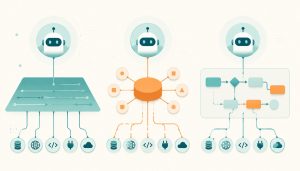
LangGraph is a graph-based state machine. You model your agent’s execution logic as nodes and edges. Every state transition is explicit, trackable, replayable, and recoverable. The framework doesn’t decide what your agent should do—it gives you precise control over how it executes. Think of it as a workflow engine that happens to be designed around LLM calls.
CrewAI is role-driven multi-agent orchestration. You define a crew of “specialists”—a researcher, an analyst, a writer—assign tasks, and let them collaborate. The abstraction maps naturally to how humans think about team work. An experienced engineer can go from idea to working demo in two to three days. That speed advantage is real, and it’s the main reason CrewAI has the adoption it does.
AutoGen, originally from Microsoft Research, models collaboration as multi-agent conversation: agents exchange messages, messages trigger actions, actions generate more messages. For code generation and exploratory research tasks, that conversational model feels natural. But in 2026, the framework’s trajectory changed: Microsoft shifted primary development resources to Microsoft Agent Framework, its official successor. AutoGen is now in maintenance mode—security patches and bug fixes only, no new features.
That last point shapes every recommendation below.
Orchestration Models: Graph vs. Roles vs. Conversation
This is the deepest difference between the three frameworks—not a matter of feature count, but of design philosophy.
LangGraph models workflows as directed graphs. Each node is a processing step; edges determine flow, and can carry conditions, loops, or parallel branches. State passes between nodes with explicit inputs and outputs. The payoff is predictability: given the same input, the execution path is deterministic. The cost is upfront design work—you have to think through the graph structure before writing a single LLM call.
CrewAI models workflows as role-based collaboration. Instead of asking “which node runs third?”, you ask “which specialist handles this?” The framework handles scheduling. That abstraction is friendly to business logic and fast to prototype. The tradeoff shows up in longer task chains: when agents start delegating to each other, control flow becomes opaque. CrewAI introduced Flows (deterministic pipelines) in 2025 to address this, but the original Crews mode—where agents coordinate autonomously—can still produce unexpected delegation chains in long-running jobs.
AutoGen models workflows as multi-turn conversation. The conversational approach feels natural for tasks that are inherently dialogic—debugging sessions, iterative code review, open-ended research. The downside is that conversation is harder to bound: without explicit termination conditions, loops can run longer than intended, and you end up writing guard logic that you’d get for free in a graph model.
Learning Curve: Fast, Slow-but-Worth-It, and Uncertain
CrewAI has the gentlest on-ramp. The API reads almost like plain English. A Python developer with no prior agent framework experience can produce a meaningful prototype in a week. That’s not a trivial advantage when you’re trying to get buy-in from stakeholders or validate whether an agent approach is worth pursuing at all.
LangGraph takes longer to click—typically one to two weeks before the graph-state mental model feels natural rather than forced. The official documentation is thorough, and the LangChain ecosystem provides a large community for troubleshooting. The investment pays off: once you understand how state flows through the graph, debugging becomes systematic rather than trial-and-error. Systems built in LangGraph tend to stay debuggable as they grow.
AutoGen improved significantly with the 2.0 rewrite—the API is cleaner, and an experienced developer can build a prototype in under a week. But with the framework now in maintenance mode, the calculus has changed. Learning AutoGen deeply is a bet on a technology that won’t gain new capabilities. For most teams, that’s a bet that doesn’t make sense to take in 2026.
Production Readiness: The Gap Is Significant
This is where the three frameworks diverge most sharply, and where the choice matters most.
For high-reliability use cases like healthcare or finance, this deterministic approach significantly reduces the risk of agents taking unintended execution paths.
CrewAI works well for teams that iterate quickly on smaller task sets. The friction appears in hierarchical mode: when a manager agent delegates to specialist agents, and those specialists delegate further, the chain can become brittle over long runs. At least one production team reverted from hierarchical to sequential mode after repeated failures on the 40th-plus task iteration. Flows, CrewAI’s answer to this problem, is more reliable but also more verbose to write—it gives up some of the ergonomic advantages that made CrewAI attractive in the first place.
AutoGen 2.0 is more reliable than 1.x, but conversational loops still require explicit hard-stop logic to prevent runaway execution. Combined with the maintenance status, the case for putting AutoGen in a new production system is thin. Microsoft’s own guidance points new projects toward Microsoft Agent Framework. If you’re in a pure Python environment, LangGraph is the more defensible choice.
Framework Comparison at a Glance
| Dimension | LangGraph | CrewAI | AutoGen |
|---|---|---|---|
| Orchestration model | Directed graph state machine | Role-driven collaboration | Multi-agent conversation |
| Time to first prototype | 1–2 weeks | 2–3 days | 5–7 days |
| Execution determinism | High (deterministic paths) | Medium (Flows: high / Crews: medium) | Low (conversation-driven) |
| State persistence | Native, built-in | Requires additional setup | Limited |
| Human-in-the-loop | First-class primitive | @human_feedback decorator | Conversation termination pattern |
| Production reliability | High | Medium (caution on long tasks) | Medium (requires hard-stop logic) |
| Long-running task stability | Strong | Variable (hierarchical mode) | Requires explicit guards |
| Development status | Active development | Active development | Maintenance mode (2026) |
| Best fit | Production, auditable workflows | Rapid prototyping, role-based tasks | Research experiments, code gen |
Decision Guide: Which Framework for Your Situation
Choose LangGraph when:
Your workflow needs to be auditable, recoverable, and predictable. Compliance-heavy domains—healthcare, finance, legal—where an agent taking an unintended path has real consequences. You need human-in-the-loop without writing your own interrupt and resume logic. You’re making a three-plus year technology bet and don’t want to risk backing a framework that stops evolving.
A pattern that works well in 2026: prototype in CrewAI to validate the business logic, then rewrite the production version in LangGraph once the requirements are stable. Structured JSON handoff between the two phases keeps the migration tractable. This isn’t wasted effort—the CrewAI prototype clarifies exactly what the LangGraph graph needs to look like.
Choose CrewAI when:
You need a working demo in front of stakeholders within a week. The task maps naturally to a team of specialists collaborating. Your engineering team knows Python and doesn’t want to reason about graph topology before shipping something. You’re in discovery mode and the goal is learning, not a production system.
Start with CrewAI, validate the concept, then decide whether the operational requirements justify migrating to LangGraph. Many projects never need to make that migration—CrewAI in sequential or Flows mode handles a lot of real workloads cleanly.
Don’t start new projects on AutoGen:
AutoGen entering maintenance mode tends to be underweighted in framework comparisons. The GitHub star count is high, but that’s historical accumulation—first-party feature development has stopped. The community still produces tutorials and third-party extensions, but the framework itself won’t gain new capabilities.
If you have significant existing AutoGen code, you don’t need to migrate immediately. Security patches continue, and working code doesn’t need to be rewritten on principle. But for any greenfield work, the opportunity cost of learning AutoGen’s model deeply—when that investment won’t compound with new framework improvements—is hard to justify.
AutoGen remains reasonable in one narrow context: pure research or experimental code that will never go to production, where the conversational agent model is exactly what you want to study. For that use case, the maintenance status doesn’t matter much.
The Question Beneath the Comparison
All three frameworks are solving the same core problem: how do you get multiple LLM calls to collaborate on a task that’s too complex for a single prompt? But they start from different assumptions about who’s building and what they need.
LangGraph is an engineer’s tool. It assumes you want control and are willing to pay for it in design overhead. CrewAI is a product builder’s tool. It assumes you want to move fast and are willing to accept some opacity in the control flow. AutoGen was a researcher’s tool—optimized for exploration rather than production deployment.
Understanding that underlying orientation is more useful than comparing feature lists. Your team’s current stage—early validation versus operational system—should drive the framework choice more than any benchmark or stars count.
The fastest path from prototype to production usually isn’t picking the “most powerful” framework at the start. Use CrewAI to think clearly about the problem. Use LangGraph to build a system that runs reliably at scale. The frameworks are complementary, not mutually exclusive.
Stay updated with our latest AI insights