OpenAI gave GPT-5.5 five reasoning levels. Most people crank it to max and wonder why their outputs got worse. Here’s how to actually pick the right one.
The Biggest Misconception About Reasoning Effort
More reasoning does not mean better output. That single sentence could save you hundreds of dollars in API costs and hours of frustration.
GPT-5.5 ships with five reasoning tiers: none, low, medium, high, and xhigh. The naming implies a linear scale where higher equals better. It doesn’t work that way. Reasoning effort is a task-matching dial, not a quality slider. Crank it too high for a simple task and you get bloated, overthought responses that miss the point. Set it too low for a complex problem and you get shallow surface-level answers.
The engineers who built these tiers designed them for different cognitive loads. Treating xhigh as the default is like using a sledgehammer to hang a picture frame. You’ll get the nail in eventually, but you’ll also crack the wall.
Five Tiers at a Glance
| Tier | Best For | Typical Tasks | Avoid Using For | Speed | Cost |
|---|---|---|---|---|---|
| none | Lookup, formatting, conversion | Translation, summarization, reformatting | Anything requiring inference | Fastest | Lowest |
| low | Light analysis, routine writing | Emails, copy, simple scripts | Multi-step logic, complex debugging | Fast | Low |
| medium | Standard analysis, moderate complexity | Data analysis, code review, strategy notes | Mathematical proofs, novel algorithms | Moderate | Moderate |
| high | Deep reasoning, complex problems | System architecture, algorithm design, strategic planning | Simple tasks (wasteful) | Slow | High |
| xhigh | Extreme complexity, multi-layer reasoning | Formal proofs, multi-constraint optimization, novel research | Most daily work | Slowest | Highest |
The sweet spot for most professional work sits at medium. That’s not a compromise; it’s where the model performs best on tasks that require judgment without needing exhaustive logical chains.
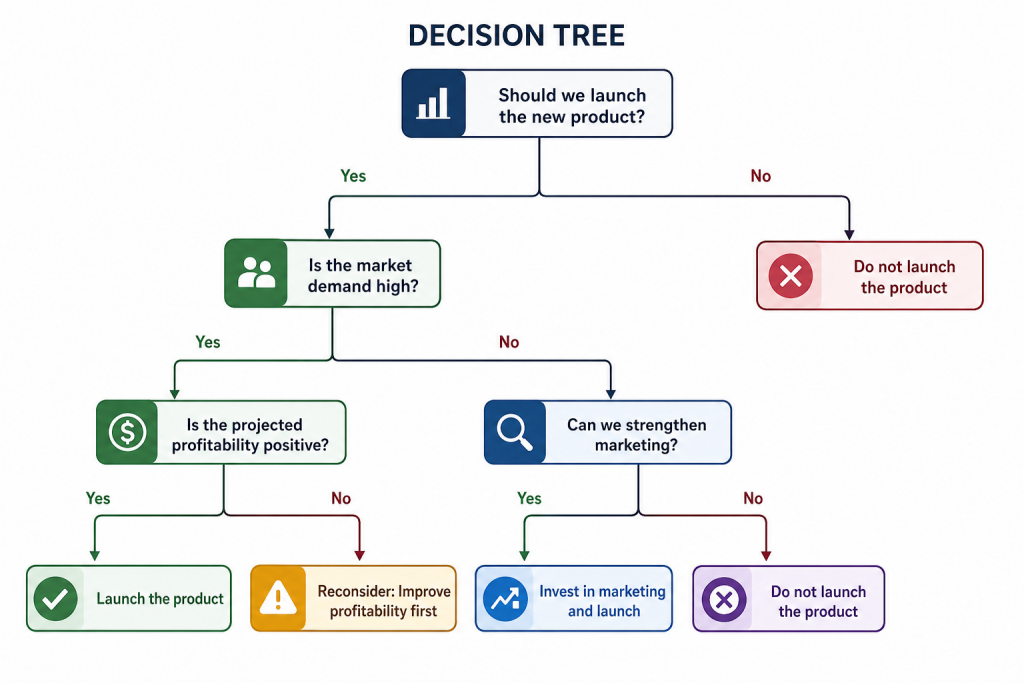
The 30-Second Decision Tree
You don’t need a flowchart app for this. Three questions, thirty seconds, done.
Question 1: Does this task require reasoning at all?
If you’re asking the model to translate text, convert formats, look up definitions, or summarize existing content, the answer is no. Use none. The model doesn’t need to think; it needs to execute a well-understood transformation.
If the task requires any form of analysis, judgment, or inference, move to the next question.
Question 2: How many reasoning steps are involved?
Count the logical hops between input and output:
- One hop (single-step analysis, direct classification, straightforward judgment) — use low
- Two to three hops (comparison, trade-off evaluation, synthesis from multiple inputs) — use medium
- Four or more hops (recursive thinking, multi-angle verification, proof construction) — use high or xhigh
A practical way to count hops: if you could explain the reasoning in one sentence, that’s one hop. If it takes a paragraph with “however” and “on the other hand,” that’s two to three. If you need a whiteboard with arrows pointing in multiple directions, that’s four-plus.
Question 3: Is there a definitive correct answer?
This is the calibration step most people skip:
- No definitive answer (creative writing, brainstorming, open-ended advice) — drop down one tier from where you landed
- Definitive answer exists (math problems, debugging, logical proofs, factual verification) — stay at your current tier or bump up one
Why? Tasks with clear correct answers benefit from exhaustive reasoning because the model can self-verify. Open-ended tasks suffer from excessive reasoning because the model second-guesses creative choices.
Real-World Scenarios That Reveal the Pattern
Writing a follow-up email to a client
The task: Remind a prospect to respond to your pricing proposal without sounding pushy.
Reasoning depth: Tone calibration and word choice matter, but the logical structure is simple. One hop.
Pick: low
Using medium here produces emails that read like they were written by a committee. The extra reasoning adds hedging language and excessive politeness that makes you sound uncertain about your own offer.
Analyzing a quarterly earnings report
The task: Identify three risk factors from the filing and assess their potential impact on stock price.
Reasoning depth: Requires comparing data across sections, identifying trends, and evaluating second-order effects. Two to three hops.
Pick: medium
Financial analysis has established frameworks. The model doesn’t need to invent a methodology; it needs to apply one competently. High would waste tokens on meta-reasoning about analytical approaches rather than doing the actual analysis.
Designing a microservices architecture for scale
The task: Design a system handling one million concurrent users with constraints on latency, reliability, and infrastructure cost.
Reasoning depth: Multiple interacting constraints, failure mode prediction, trade-off cascades. Four-plus hops.
Pick: high
Despite the complexity, there are established patterns (event sourcing, CQRS, circuit breakers) that the model can reference. xhigh would be appropriate only if you’re designing something genuinely novel with no precedent in existing literature.
Proving a mathematical theorem
The task: Construct a formal proof with rigorous logical steps where any single error invalidates the entire chain.
Reasoning depth: Recursive verification, exhaustive case analysis, multi-step logical chains with no room for shortcuts.
Pick: xhigh
This is one of the few categories where maximum reasoning effort actually pays off. Every intermediate step needs verification, and the cost of a single logical error is total failure.
Three Counter-Intuitive Traps With High Reasoning
Trap 1: Higher effort produces worse creative output
When you set reasoning to high or xhigh for creative tasks, the model enters a conservative mode. It evaluates ideas before generating them, filtering out the unexpected angles that make creative work interesting. A brainstorming session at xhigh gives you three thoroughly-justified ideas. The same session at low gives you twelve rough ideas, three of which are genuinely surprising.
The rule: Creativity needs breadth first, depth second. Generate at low, then refine your best picks at medium.
Trap 2: High reasoning amplifies prompt weaknesses
A mediocre prompt with medium reasoning produces acceptable output because the model fills in gaps with reasonable assumptions. That same mediocre prompt at xhigh produces bizarre output because the model follows your instructions to the letter, exposing every ambiguity and contradiction in your request.
Think of it like hiring a junior developer versus a senior architect. The junior fills in the blanks with convention. The architect asks why your spec contradicts itself in paragraph three.
The rule: If your prompt isn’t tight, iterate at low or medium first. Only escalate reasoning effort after your instructions are clean.
Trap 3: High reasoning kills exploration
Exploration tasks—comparing approaches, surveying options, brainstorming alternatives—need the model to spread attention across possibilities. High reasoning focuses attention deeply on one path.
This causes a specific failure mode: the model picks the first plausible direction and reasons deeply about it, giving you a thoroughly-argued case for an approach that might not be the best one. At medium, it would have shown you four options with brief trade-offs, letting you pick the direction.
The rule: Explore at low or medium. Commit at high. Execute at the appropriate tier for the final task.
Cost and Latency: What the Numbers Look Like
| Tier | Relative Cost | Relative Speed | Sustainable Frequency |
|---|---|---|---|
| none | 1x | 1x (baseline) | Dozens per day |
| low | 1.5x | 0.8x | Ten to twenty per day |
| medium | 3x | 0.5x | Several per day |
| high | 6x | 0.3x | One to two per day |
| xhigh | 10x | 0.1x | A few per week |
These ratios matter for production systems. If you’re building an AI-powered feature that handles thousands of requests, the difference between low and high is a 4x cost increase with 2.7x slower responses. That translates directly into infrastructure budget and user experience.
For individual use, the cost difference matters less than the quality match. A task done well at medium beats the same task done poorly at xhigh because the model overthought it.
A Practical Workflow for Teams
If you’re managing a team that uses GPT-5.5 through an API, here’s a tiering framework that prevents waste:
Batch processing (data extraction, classification, formatting): none or low. These tasks have clear patterns and don’t benefit from deep reasoning. Running them at medium wastes budget.
Individual contributor work (drafting, code generation, analysis): default to medium, with permission to escalate to high for specific problems. This covers 80% of professional knowledge work.
Strategic decisions (architecture reviews, competitive analysis, long-term planning): high. These are infrequent enough that cost doesn’t matter, and the quality difference between medium and high is noticeable.
Research problems (novel algorithms, mathematical work, multi-constraint optimization): xhigh, but only after confirming the problem genuinely lacks established solutions. If there’s a textbook answer, high is sufficient.
The Self-Check Before Every Request
Before picking a tier, run through these three filters:
Filter 1: Does this genuinely need reasoning? Most tasks that feel complex are actually just long. Length doesn’t equal reasoning depth. A ten-page report might only require low reasoning applied many times, not high reasoning applied once.
Filter 2: How deep does the reasoning chain go? Count the logical hops honestly. Most professional tasks land at two to three hops, which means medium is your default, not high.
Filter 3: What’s my time budget? If you’re iterating rapidly and need fast feedback loops, drop one tier. If this is the final output that ships to a client, you can afford to go one tier higher.
The model works best when reasoning effort matches task complexity. Not above it, not below it. Right at the level where the cognitive load of the problem meets the analytical depth of the response.
FAQ
Does reasoning effort affect the length of the response?
Yes. Higher reasoning effort tends to produce longer outputs because the model shows more of its analytical process. If you want concise answers to complex questions, use high reasoning with an explicit instruction to be brief. The reasoning happens internally; you control how much surfaces in the response.
Can I change reasoning effort mid-conversation?
Absolutely. In fact, this is the recommended approach for multi-stage work. Start a project exploration at low, narrow down options at medium, then execute the chosen path at high. Each message can use a different tier.
Is medium always the safe default?
For most professional knowledge work, yes. Medium handles the vast majority of tasks that require judgment without over-committing resources. The exceptions are purely mechanical tasks (use none or low) and genuinely novel problems with no established solutions (use high or xhigh).
How does reasoning effort interact with system prompts?
Higher reasoning effort means the model pays closer attention to your system prompt instructions. At none or low, the model might skip subtle or detailed instructions. At high or xhigh, it follows them precisely. This is why poorly-written system prompts produce worse results at higher tiers: the model follows bad instructions more faithfully.
What happens if I pick too low a tier for a complex task?
The model gives you a surface-level answer that looks reasonable but misses important details. It won’t warn you that it skipped steps. The output passes a casual review but fails under scrutiny. This is more dangerous than picking too high, because too-high just wastes resources while too-low produces confident-sounding but incomplete analysis.
Is xhigh worth the 10x cost for coding tasks?
Rarely. Most coding tasks—even complex ones—have patterns the model already knows. high handles architecture decisions, algorithm optimization, and complex debugging well. Reserve xhigh for tasks where you’re pushing the boundary of what the model can do: novel algorithms, formal verification, or multi-system integration with unusual constraints.
How do reasoning tiers compare across different models?
Each model family calibrates its tiers differently. GPT-5.5’s medium roughly corresponds to the maximum reasoning effort of earlier models like GPT-4o. This means if you were getting good results from GPT-4o at maximum settings, start with medium on GPT-5.5 and adjust from there.
Stay updated with our latest AI insights