On July 9, 2026, OpenAI did something the industry had been waiting two years for. They turned the Agent from a demo into a shipping product.
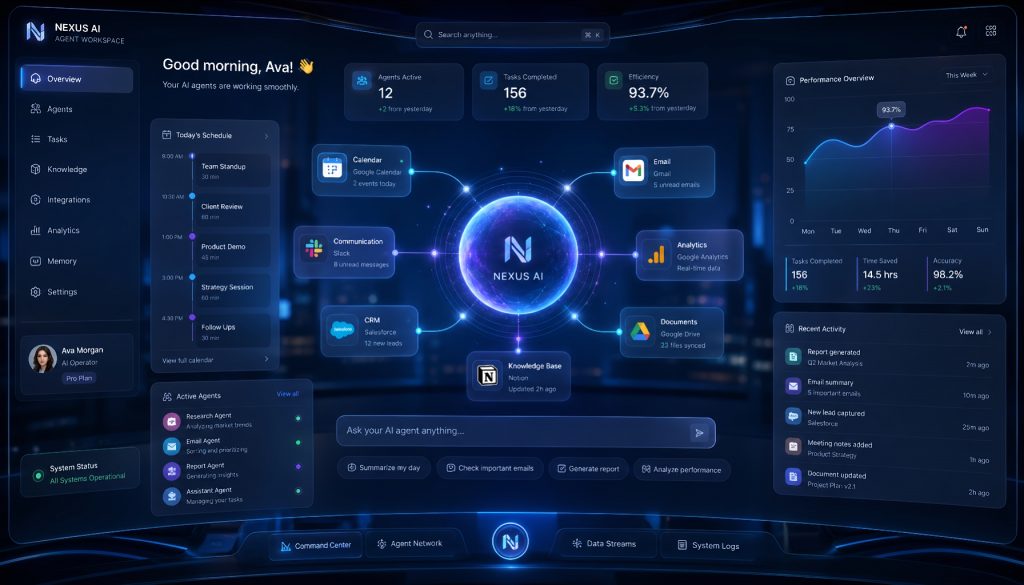
The product is called ChatGPT Work. You give it a goal, it goes into your various apps to collect information, breaks the task into steps, works independently for hours, and hands back not a text response but finished spreadsheets, slide decks, documents, even shareable web applications.
The same day, GPT-5.6 went live, the Codex desktop app merged into the new ChatGPT, and the standalone Atlas browser began its sunset. This was not a routine feature update. It was the convergence of everything OpenAI had been building over the past year.
But the interesting part is not how powerful the product is. The interesting part is what changes when an AI Agent stops being a lab concept and becomes something ordinary people can just use.
From “Can Talk” to “Can Deliver”
For two years, the AI industry had a subtle misalignment.
Models kept getting stronger. Benchmarks fell one after another. But the average user’s experience barely changed. You ask ChatGPT a question, you get a block of text. You ask it to write a proposal, you get a block of text. You ask it to analyze data, you still get a block of text.
Text is AI’s default output format. But the deliverables of real work are not text.
A market analysis is a slide deck with charts. A project timeline is a Gantt chart. A competitive analysis is a multi-dimensional comparison table. You don’t need AI telling you “consider analyzing from these five dimensions.” You need the analysis already done, data filled in, formatting polished.
ChatGPT Work solves exactly this. It skips past the “giving advice” stage and goes straight to “delivering finished work.”
OpenAI’s product page puts it plainly: you give it an outcome, and it can navigate ambiguity on its own, adjust its approach as work unfolds, and deliver polished artifacts with fewer prompts.
In plain language: you no longer need to break tasks into ten steps and spoon-feed each one. You just say “build me a Q3 competitive analysis covering these five companies” and go do something else.
What the Numbers Signal
OpenAI shared a few figures: Codex has over 5 million weekly active users, with more than 1 million using it for work outside software development. The plugin directory has over 1,400 connectors.
These numbers alone are not shocking. But the signal is clear: Codex, originally built for programmers, has been “misused” by massive numbers of non-technical users. People are not writing code with it. They are doing research, writing reports, processing data.
When users find uses beyond what a product was designed for, product teams have two choices: push users back, or follow them. OpenAI chose the latter. They gave this behavior a name, a package, and a price.
That is the real origin of ChatGPT Work. Not some product manager’s flash of insight, but user behavior forcing a product decision.
What the Atlas Sunset Tells Us
Another piece of news got overlooked that same day: OpenAI began winding down the standalone Atlas browser.
When Atlas launched earlier this year, many assumed OpenAI was building an AI browser to challenge Chrome. Less than six months later, Atlas became a built-in feature of the ChatGPT desktop app.
There is a critical product judgment buried here: AI Agents do not need a standalone browser. They need browsing as one capability among many, embedded in a unified assistant.
The standalone AI browser as a category might have been a dead end from the start. If a company with OpenAI’s resources cannot sustain one, teams building startups in this space need to seriously reconsider their positioning.
The durable pattern appears to be: Agents embed browsing as a capability, rather than browsers bolting on Agents as an add-on.
What 1,400 Plugins Mean
ChatGPT Work is not a closed system running in isolation. Its core design connects into your existing tools.
Those 1,400 plugins cover mainstream work software: calendar, email, docs, spreadsheets, project management, CRM, databases. You @ mention an app, and Work pulls data from it. You can have it pull a client list from Salesforce, cross-reference meeting notes from Google Calendar, and generate a client communication summary.
This means an Agent’s value depends not on how smart it is, but on how many of your daily systems it can plug into.
This is also why OpenAI highlights plugin count as a core metric. In the Agent era, integration capability is product strength. Whoever connects more systems, whoever can invoke richer context, has the more useful Agent.
But this simultaneously introduces a very real concern: when a single Agent can access your email, calendar, file system, and CRM simultaneously, the attack surface for information security expands exponentially.
What the Pricing Model Implies
OpenAI did not put ChatGPT Work on a simple subscription. They introduced a usage-metered model.
You are not paying a fixed monthly fee. You pay based on actual compute resources consumed. The longer Work runs, the more plugins it calls, the more data it processes, the higher the cost.
This pricing logic is revealing. It implies OpenAI expects massive variance in usage. Some people might use it once a week for a quick report. Others might run it for hours daily on complex projects. A fixed subscription would feel wasteful to the first group and leave the second group consuming resources without constraint.
For enterprise buyers, though, usage-metered pricing means unpredictable costs. This is likely a near-term barrier to large-scale enterprise procurement.
A Beginning, Not an Endpoint
On launch day, nearly every tech publication discussed whether this signals AI replacing white-collar workers.
That question is too grand. So grand it loses discussion value.
The more practical question: when Agents can deliver complete work products, what happens to the barrier of “using AI”?
Before ChatGPT Work, getting AI to actually do your work required understanding prompt engineering principles, knowing how to decompose tasks, being able to judge output quality, and manually converting AI’s text output into final deliverables. This workflow demanded skill and patience. Most people gave up at step two.
ChatGPT Work compresses these steps. You don’t need prompt expertise, don’t need to manually break down tasks, don’t need to bridge between AI output and final deliverables. You give a goal, you get a finished product.
But compression is not elimination. You still need to know which goals are worth pursuing, what results count as acceptable, when to intervene. The threshold for judgment has not lowered. Only the threshold for execution has been driven into the floor.
This echoes an increasingly clear trend: what is truly scarce in the AI era is not people who can use tools, but people who know what is worth doing.
OpenAI used ChatGPT Work to tell the market: Agents are no longer future tense. They are present tense.
The question is, when everyone can use the same Agent to produce the same quality of work output, where exactly is your competitive advantage?
The answer to that probably is not in any product’s documentation.
Related Reading
- ChatGPT Work: OpenAI Agents Now Deliver Finished Work, Not Chat Replies
- ChatGPT Work Is OpenAI Bet That AI Should Deliver Finished Work, Not Just Advice
Stay updated with our latest AI insights