Being clever at writing code doesn’t matter much anymore.
The 2026 wave of AI coding tools has compressed the capability gap. What separates good tools from great ones now is something else: who helps you finish the work and ship it.
Not just writing a function and calling it done. Understanding the entire repo, editing multiple files, running tests, opening PRs, fixing CI failures. Walking that entire chain to completion. That’s what shipping means.
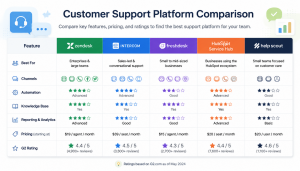
We’re comparing Claude Code, Cursor, OpenAI Codex, and GitHub Copilot from this “delivery pipeline” angle. These four dominate the landscape right now.
Repo Understanding: Who Actually Reads Your Project
Claude Code wins this category without much debate. The 1M token context window paired with Opus 4.6’s reasoning capability means you can drop in a medium-to-large monorepo and watch it map out module relationships, dependency chains, even CI configurations. This goes beyond “scanned the file list” understanding. It traces call chains across files.
Cursor takes a different path. Codebase indexing powers semantic search and context injection inside the IDE, which works well for small to medium projects. But its context management leans heavily on IDE windows and selected files. Large projects cause it to lose context.
Codex now includes codebase indexing that scans entire project structures. Combined with its per-task worktree design, where each task operates on an independent Git branch without polluting others, it maintains structural awareness. The understanding depth trails Claude Code, but the structural sense is there.
Copilot’s agent mode gained multi-file awareness, but its foundation remains inline suggestions. Repo-level global understanding ranks weakest among the four. Think of it as a fast colleague who jumps in immediately, not the type who spends thirty minutes reading the entire project before touching code.
Multi-File Changes: Touching One Thing Means Updating Everything Else
This separates completion tools from delivery tools.
Claude Code was built for this. One terminal command triggers simultaneous edits across controller, service, tests, and migrations, plus automatic import path updates. Agent Teams pushes this further. One orchestrator manages up to 10 sub-agents working in parallel. Frontend changes components while backend modifies APIs while test agents write cases alongside.
Cursor’s Composer mode handles multi-file edits too, with smooth IDE-native diff reviews. But its multi-file changes feel more like “you tell me which files to modify” rather than proactively discovering related files the way Claude Code does.
Codex delivers solid multi-file capability through per-task worktrees. Each task lives on its own Git branch, making diffs immediately visible after changes. Multiple agents can run different tasks in parallel, which proves useful when batch-processing issues.
Copilot agent mode now supports multi-file editing, runs terminal commands, fixes lint errors, and auto-iterates. Compared to Cursor Composer and Claude Code though, the scenario coverage falls short.
Running Tests: Can It Verify Its Own Work
This determines whether you can trust AI to work independently.
Claude Code runs test commands directly in the terminal. When tests fail, it automatically analyzes errors, modifies code, reruns tests, looping until they pass or until human intervention becomes necessary. Namespace-based sandbox isolation plus network blocking keeps security tight.
Codex approaches testing seriously. Linux gets kernel-level sandboxing, Windows gets native sandbox. Code runs in local secure environments while AI reasoning happens in the cloud. Test results appear directly in diffs, creating a complete experience.
Cursor runs tests through terminal integration, but operates more on a “you ask me, I run” basis rather than proactively running tests to verify its own changes like Claude Code does.
Copilot can run terminal commands now and auto-fixes based on lint errors with iteration. The proactivity still lags though. Most situations require manual triggering.
Opening PRs and Git Operations: The Last Mile
Delivery’s final step transforms code into a reviewable PR.
Claude Code integrates Git deeply. Commit, push, open PR, all in one flow. Combined with GitHub Actions, it auto-fixes after CI failures and pushes again. This comes closest to a “you just review” experience currently available.
Codex’s per-task worktree design naturally suits PRs. Each task gets one branch, changes get reviewed through diffs, confirmation triggers merges. The process flows clearly, though automatic PR opening doesn’t match Claude Code’s smoothness.
Copilot holds a unique advantage: it lives inside GitHub. The coding agent triggers directly from issues, works in cloud VMs, and auto-opens PRs. This “issue to PR” closed loop delivers a native experience no other tool matches.
Cursor shows relative weakness in Git operations. It writes commit messages for you, but opening PRs remains your responsibility. Its positioning leans toward “coding partner” rather than “delivery partner.”
Failure Recovery: Can It Catch Its Own Mistakes
This most severely tests “colleague” quality.
Claude Code currently shows the strongest self-recovery. Failed tests trigger automatic analysis, modification, and rerun cycles. CI failures get log reads, problem location, and fix commit pushes. In Agent Teams, when a teammate gets stuck, the orchestrator reassigns tasks. Perfect? No. Sometimes teammates disconnect, orchestrators lose tracking, requiring manual restart prompts.
Codex’s sandbox design makes failure cheap. Work happens in isolated worktrees, so disasters just get discarded and restarted. But its automatic fix loops don’t pursue recovery as aggressively as Claude Code.
Cursor surfaces errors with fix suggestions but shows little initiative to actually apply them. More like a colleague who says “this threw an error, want me to try fixing it this way?”
Copilot’s automatic fixes in the IDE concentrate on lint and type errors. For logic-level failures, self-recovery capability remains limited.
Parallel Agents: Can It Handle Multiple Tasks Simultaneously
This defines the new 2026 battleground.
Claude Code’s Agent Teams represents the most aggressive approach. Up to 10 sub-agents run in parallel, sharing task lists and communicating with each other. Perfect for large refactors and cross-module development. Honestly though, this feature remains early-stage. Teammates get stuck, orchestrators lose tracking, problems occur regularly.
Codex supports multiple agents running different tasks in parallel, each with independent worktrees. More like “multiple independent colleagues each doing their own thing” rather than Claude Code’s team collaboration concept. But stability runs higher because tasks isolate completely.
Cursor and Copilot currently lack native parallel agent capability. Cursor can open multiple Composer sessions, but that resembles opening multiple windows rather than true parallel collaboration.
Security Sandboxes and Enterprise Audit
Enterprise users care not just about getting work done, but about avoiding security incidents while doing it.
Codex invested heavily here. Kernel-level sandboxing runs by default, code executes in local sandboxes, reasoning happens in the cloud, codebases never get fully exposed.
Claude Code uses namespace-based isolation plus network blocking, creating clear security models. Enterprise editions include audit logs and permission controls.
Cursor added OS-level sandboxing in early 2026, reducing permission prompts by roughly 40%, but overall security architecture trails the first two in maturity.
Copilot backs into GitHub’s enterprise infrastructure, getting SSO, audit logs, and policy management out of the box. For teams already all-in on GitHub, compliance costs run lowest.
Other Contenders
Windsurf delivers decent IDE experience but lacks documented sandbox solutions and complete delivery pipelines. Better suited for individual developers’ daily coding rather than serving as a “delivery colleague.”
Devin pursues fully autonomous agent routes, automating everything from issue to PR. Sounds great. In practice though, “autonomy illusion” problems surface prominently. It thinks it finished but actually got things wrong. Works for very specific small tasks. Complex projects still require substantial human intervention.
So Who Actually Ships Like a Real Colleague?
If you need someone to own entire features independently, from understanding requirements through opening PRs across the full pipeline, Claude Code comes closest right now. Agent Teams remains rough but points in the right direction.
If your workflow lives in GitHub issue to PR to merge, Copilot’s coding agent delivers the smoothest experience. Native integration advantages compound significantly.
If you prioritize fluid coding experience with fast review cycles, Cursor remains the best IDE partner. But think “colleague who codes fast” rather than “colleague who ships work.”
Codex offers an interesting middle option. Per-task worktrees, parallel agents, kernel-level sandbox, solid engineering design throughout. If you already live in OpenAI’s ecosystem, its delivery capability won’t disappoint.
In 2026, don’t just evaluate AI coding tools on how beautifully they write code. Evaluate who helps you open PRs, turn CI green, and ship work.
That’s the colleague standard.
Sources
Pricing and capability claims above were checked against vendor documentation. Verify current numbers before purchasing, since vendors change tiers often.
- Claude Code documentation
- GitHub Copilot coding agent docs
- OpenAI Codex documentation
- Cursor documentation
- SWE-bench Verified leaderboard
Stay updated with our latest AI insights