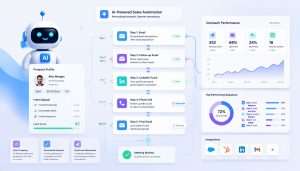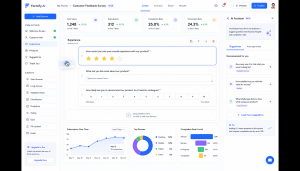
The short answer: if you want a data orchestration hub, start with Clay. If you want database, lists, outreach, and sequences in one package, Apollo remains the shortest path. If you need buyer signals, community tracking, and dark funnel intelligence, Common Room goes deeper. If you want signals to trigger actions directly, Unify works more like a signal-to-action system.
These four names get mentioned together because they all sell into the “AI sales efficiency” market. But treating them as interchangeable products is how you end up buying the wrong one.
The Real Shift in 2026 Prospecting Isn’t Another Email-Writing Model
The real change is that sales teams no longer settle for “more contacts.”
What matters now breaks into four questions:
Who is showing buying signals.
Can those signals convert into actionable lists.
Can those lists auto-enrich with context, scoring, and priority.
Can outreach connect directly without another export-import cycle.
Clay, Apollo, Common Room, and Unify each sit at different points along these four paths. They all look like AI sales platforms, but their core strengths point in different directions.
Start by Separating Their Positioning
Stop comparing tools at the wrong layer.
| Tool | Core Positioning | Top Strength | Biggest Gap | Best Fit |
|---|---|---|---|---|
| Clay | Data orchestration + enrichment hub | 150+ data sources, workflows, Claygent, signal orchestration | Not an out-of-the-box sales execution system | RevOps, growth, teams that build processes |
| Apollo | Database + prospecting + sequencing | Contact database, lists, outreach, email sequences unified | Deep customization and signal orchestration trail specialized platforms | Small teams, sales teams, fast ramp-up |
| Common Room | Buyer intelligence / signal capture | 50+ signal integrations, RoomieAI, Person360 | Opaque pricing, leans toward mid-to-large teams | PLG, community-driven, dark funnel focus |
| Unify | Signal-to-action outbound platform | Connects intent, buyer data, sequencing, AI personalization end-to-end | More of a full GTM motion, not a lightweight tool | Growth teams with clear outbound motion |
Only Apollo looks like a traditional all-in-one sales tool.
Clay functions more like a workbench for orchestrating data and actions.
Common Room goes deeper on buyer signal capture and identity resolution.
Unify operates more like an execution system that turns signals into actions.
This explains why some teams call Clay a superpower while others stare at it confused. Clay expects you to design flows, not just import lists.
Clay: The Power Isn’t Just Data, It’s Turning Data Into Process
Clay has locked in its position over the past two years. It’s not a simple B2B database. It’s a GTM orchestration layer.
The homepage and pricing pages repeat a few themes: 150+ providers, intent signals, Claygent, MCP server, workflows, HTTP API, webhooks, CRM auto-sync. Put those together and the message becomes clear. Clay sells a layer where data and actions can be orchestrated, not just a list.
The advantages show up fast.
If your team already knows which signals to watch, how to enrich, and how to combine different data sources, Clay becomes powerful. You can pull job changes, company news, social listening, web intent, third-party enrichment, and AI research into one table. Then you score, route, sync, and trigger external actions.
Pricing is relatively transparent too. Free tier exists. Launch starts at $167/month. Growth starts at $446/month. Costs scale with actions and data credits.
But Clay’s threshold is real. It’s not a “sign up and get results” sales tool. Without RevOps thinking or someone willing to build flows, it easily becomes an expensive experiment nobody maintains.
Clay works like a power-up for teams that build systems, not a universal remedy for all sales teams.
Apollo: Still the Closest to “Buy It and Use It”
Apollo stays competitive in 2026 for a simple reason: it saves time.
Database, filters, contacts, sequences, follow-ups, analytics. Almost everything a sales team uses daily comes bundled. The site emphasizes large database, advanced filtering, automated outreach, CRM integration, and analytics. The Starter plan is free. Trials include 50 credits.
Many small teams or sales-led organizations pick Apollo not because it’s the most advanced, but because it’s the closest to “buy it and start generating pipeline.”
You don’t need to map out a full signal architecture first. You don’t need a dedicated RevOps person to build workflows. For companies just starting outbound, or SDR teams that want to move fast, Apollo offers the shortest path.
But the ceiling is clear.
If you later start prioritizing custom signals, cross-source waterfall enrichment, complex scoring, or finer buyer intent from community, product usage, and website visitors, Apollo starts feeling adequate but not sharp.
It fits broad-coverage unified prospecting. It may not fit highly differentiated signal-driven outreach.
Common Room: When Prospecting Shifts from Database to Buyer Intelligence
Common Room’s real edge isn’t “another AI SDR.” It’s building buyer intelligence into a more complete layer.
The homepage spells it out: out-of-the-box buying signals, 50+ native signal integrations, RoomieAI Capture, Person360 waterfall enrichment, identity resolution, RoomieAI Activate.
This fits which kind of team?
Not teams that just want more people. Teams that realize the most valuable asset isn’t total contact volume. It’s catching people who are warming up earlier.
If you run PLG, community-driven go-to-market, developer marketing, or your buyers leave trackable signals across GitHub, forums, social media, your website, and product usage, Common Room delivers more value.
Because it’s not just doing enrichment. It’s unifying the buyer journey and resolving identity. That’s why Person360 and RoomieAI sit so prominently on the site.
Two issues stand out.
First, public pricing is opaque. Smaller teams struggle to gauge ROI upfront.
Second, it functions more as an intelligence layer, not necessarily the lightest tool for front-line sales reps.
Common Room usually isn’t the first hammer. It’s the layer teams add after they’ve extracted returns from generic databases and want to push signal precision higher.
Unify: The One That Connects Signals Straight to Actions
Unify’s narrative is more direct than Common Room’s. The homepage says it plainly: your outbound system of action. It connects intent data, buyer data, sales engagement, plays, AI agents, and analytics.
This matters.
Many teams don’t lack signals. They lack “what happens after the signal.” Website visit captured, product usage logged, job change noticed. But then the manual breaks appear. How to filter the list, write the message, launch the sequence, assign the lead.
Unify’s value sits here. It closes the loop from signal to action.
For growth teams, this appeals. You don’t need to purchase buyer data, research, personalization, sequencing, and workflow as separate pieces. It feels more like a system purpose-built for outbound motion.
The boundaries are also clear. Unify isn’t as open and moldable as Clay. It’s not the familiar universal database entry point like Apollo. It fits teams that already know what their outbound motion looks like and plan to go deep on signal-driven outreach.
If You’re Choosing Now: Match Team Maturity Before Feature Lists
Still early stage, small team, want to get outbound running fast
Start with Apollo.
At this point the priority isn’t architectural elegance. It’s whether lists, filters, sequences, and CRM sync can form a closed loop quickly. Apollo delivers the shortest path.
You have RevOps or growth engineering capability and want to fully orchestrate data, signals, research, and automation
Start with Clay.
Clay’s strength isn’t in individual features. It’s in how much GTM logic you can load into it. Once built, it becomes a system that expands continuously, not a one-time tool.
Your growth model depends heavily on buyer signals, community, product behavior, and dark funnel
Start with Common Room.
What you need isn’t more static contacts. It’s earlier detection of who’s warming up, and turning anonymous signals into actionable buyers.
You’ve committed to signal-driven outbound and want to upgrade the action layer too
Start with Unify.
It functions most like a platform that connects signals directly to execution. It fits teams past the basic database stage, now chasing action efficiency and timing.
A Common Mistake: Don’t Confuse “More Data” with “Better Pipeline”
Many sales teams have been fed the same illusion over recent years: more contacts means faster growth.
More teams are realizing that’s not how it works.
What separates outcomes is whether you can see the right signals earlier, judge priority more accurately, convert signals into actions faster, and stop wasting rep time on manual research and low-quality lists.
From this angle, Clay, Apollo, Common Room, and Unify aren’t competing over “who has the biggest database.” They’re competing over who gets closer to the core control layer of the GTM system.
Conclusion: Don’t Ask Who’s Best, Ask Whether You’re Missing Database, Signals, or Orchestration
If you just want to ramp volume fast, Apollo usually flows smoothest.
If you’ve realized prospecting’s core is orchestrating data, signals, and actions, Clay becomes a long-term asset.
If your opportunities hide in dark funnels and buyer journeys, Common Room deserves the investment.
If you need to turn signals directly into outbound motion, Unify shortens the path.
The real answer was never about who does everything. It’s about who fits your current bottleneck.
The dividing line in 2026 prospecting is no longer “who has more contacts.” It’s “who can see the right people earlier and connect that signal to real action.”
FAQ
What’s the biggest difference between Clay and Apollo?
Apollo works more like an all-in-one prospecting platform you can use immediately, suited for database, lists, and sequences in one place. Clay functions more like a data orchestration and enrichment hub, suited for RevOps and growth teams that build workflows.
How do I choose between Common Room and Unify?
If you care more about buyer signals, community, identity resolution, and dark funnel intelligence, Common Room goes deeper. If you care more about connecting signals directly to outbound actions, sequences, and plays, Unify gets there faster.
What should prospecting tools prioritize in 2026?
Not just database size. Look at signal quality, identity resolution, workflows, outreach execution loops, and whether your team can actually operationalize these layers.
Which teams fit Clay best?
Teams with RevOps, growth engineering, or GTM ops capacity who are willing to design their own enrichment, scoring, routing, and signal workflows get the most value from Clay.
Related Reading
Stay updated with our latest AI insights