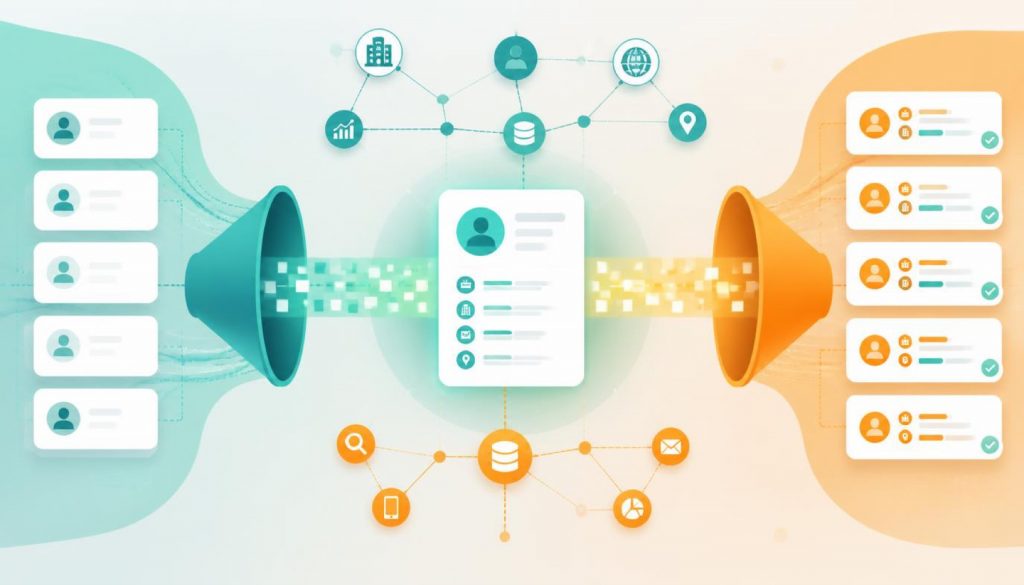
Clay’s waterfall enrichment is a clever idea. You chain dozens of data sources together, fill in contact records step by step, and get everything done inside one workflow.
Spend a few weeks with it, though, and the cracks show. Credits drain faster than you planned, failed API calls still cost you credits, the layered sourcing makes compliance hard to explain, and the moment your target market sits outside North America the data quality drops off a cliff.
Here is the short version. Clay works well for technically strong teams that enjoy building their own data pipelines. If what you actually want is “log in, get accurate data, know it’s compliant,” there are more direct options in 2026.
This comparison looks at five real Clay alternatives that teams are using today: Cognism, Apollo.io, Lusha, Lead411, and FullEnrich. Each gets measured on four things: data coverage, compliance transparency, cost structure, and who it fits.
Where Clay Actually Hits Its Limits
Clay’s selling point is flexibility. You can plug in dozens of third-party sources, query them in waterfall order, and use AI to clean and format the results.
The trouble starts here. Clay doesn’t produce data, it’s an orchestration layer. Your data quality is only as good as the weakest source in the chain. Wire up five providers and let one of them be sketchy, and the compliance story for the whole pipeline gets murky.
Credit consumption is hard to predict. Every API call spends credits, including the calls that fail. Run a full enrichment pass and the real cost often lands two to three times higher than your estimate. The $149 per month starting price looks reasonable until you watch how fast the credit top-ups pile up.
Coverage outside North America is thin. If your buyers sit in Europe or Asia-Pacific, most of the sources Clay chains together won’t have the depth you need.
The learning curve is steep. Clay is really a tool for RevOps engineers, not for salespeople. You have to understand APIs, data flow, and waterfall logic before you can get value out of it.
Cognism: Compliance First, Strongest in Europe
Cognism takes the opposite path from Clay. It produces its own data instead of relying on third-party chaining.
The biggest difference is compliance. Cognism’s mobile numbers are human-verified, its Do Not Call list coverage spans 15 countries, and GDPR compliance is built into the product rather than left as a “mind this yourself” footnote.
On coverage, Europe is where Cognism shines. If your buyers are in the UK, Germany, or France, the data quality is clearly better than what Clay’s chained sources return.
Pricing is per seat rather than per credit. That makes cost predictable, so a large enrichment run won’t suddenly add a line to your bill.
The downside is obvious too. It’s less flexible than Clay. You can’t plug in your own sources or build your own logic. You use what Cognism gives you.
Who it fits: B2B sales teams selling into Europe with hard compliance requirements. Not a match for RevOps engineers who want a fully custom data pipeline.
Apollo.io: Best Value, but Verify the Data Yourself
Apollo is one of the best-value B2B data platforms on the market right now. There’s a usable free tier, and the paid plans start lower than Clay.
The database is large, the coverage is broad, and it bundles in email sequences, a dialer, and CRM features. For a budget-conscious team, Apollo can replace several separate tools.
Data accuracy has always been the sticking point. Email data is decent, but mobile number accuracy swings more. Without a human-verification layer like Cognism’s, you’ll need to run your own cleaning pass.
Compared with Clay, Apollo’s advantage is that it works out of the box. No waterfall logic to understand, no APIs to wire up. Sign up, search, export.
Who it fits: budget-limited teams focused on North America that can live with doing their own data verification. Not ideal for enterprise sales teams with very high accuracy demands.
Lusha: Fast Lookups, Best in the LinkedIn Flow
Lusha’s core use case is simple. You spot someone on LinkedIn, you want their email and mobile number, so you install a Chrome extension and pull it with one click.
That experience is the smoothest of any tool here. No workflow to build, no data sources to understand. One click and you have the result.
Data quality is solid in North America and Western Europe, especially email. Mobile coverage trails Cognism a bit but is steadier than Apollo.
Lusha is credit-based too, but the logic is simpler than Clay’s. Look up one person, spend one credit, with no “failed calls still cost you” problem.
The limitation is that Lusha only does lookups, not orchestration. No waterfall like Clay, no email sequences like Apollo, no intent data like Cognism. It’s a precise “find this person” tool and nothing more.
Who it fits: heavy LinkedIn users, SDRs, and individuals or small teams that need contact details fast. Not for large-batch enrichment or complex workflows.
Lead411: Trigger-Based Leads, Friendly to Smaller Teams
Lead411’s difference is event triggers. It doesn’t just hand you contact data, it tells you when a company just raised funding, expanded headcount, or swapped its CTO.
Those trigger signals are valuable for sales. Instead of a cold outreach, you show up right when the buyer is most likely to have a need.
Pricing is cheaper than both Clay and Cognism, and the Unlimited plan doesn’t cap exports, which eases the cost pressure for smaller teams.
Coverage is mostly North American. Mobile quality is fine within North America but weak once you leave it. Compliance standards aren’t as strict as Cognism’s either.
Who it fits: budget-sensitive smaller teams focused on North America that value trigger-based selling. Not for global markets or companies with hard compliance requirements.
FullEnrich: One Job, Done Well
FullEnrich has a narrow focus: waterfall contact enrichment across 15 or more data sources, querying in sequence until it finds a result.
Sounds a lot like Clay? The difference is that FullEnrich only does this one thing. No workflow orchestration, no AI cleaning, no email sequences. That focus pays off in match rates, which usually beat Clay’s, because its waterfall logic is tuned deeply for the single goal of finding contact details.
Its sources include Apollo, Hunter, and Lusha, and FullEnrich manages the priority and fallback logic for you. You don’t build the waterfall yourself the way you would in Clay; FullEnrich just hands you the result.
Who it fits: teams that only need high-match-rate contact data and don’t want to build their own pipeline. Not for teams that need a complete GTM workflow.
How to Choose: One Table
| Dimension | Clay | Cognism | Apollo.io | Lusha | Lead411 | FullEnrich |
|---|---|---|---|---|---|---|
| Core strength | Data orchestration | Compliant data | Full-stack GTM | Fast lookups | Trigger leads | Waterfall enrichment |
| Data source | Third-party chaining | Owned + verified | Owned database | Owned + partners | Owned + triggers | 15+ chained sources |
| Europe coverage | Weak | Strong | Medium | Medium | Weak | Medium |
| Compliance transparency | Low | High (GDPR/DNC) | Medium | Medium | Medium | Medium |
| Cost predictability | Low (unpredictable credits) | High (per seat) | High (free tier) | Medium (credits) | High (Unlimited plan) | Medium |
| Learning curve | High | Low | Low | Very low | Low | Low |
The Last Word
Clay’s problem isn’t that it’s bad. It’s that it hands the complexity to you. If you enjoy building pipelines, Clay really is flexible. But if you just want accurate contact data so you can start selling, 2026 has options that ask less of you.
Work out first whether you want “flexible” or “low effort.” The answer falls out on its own.
Related reading
- 5 Clay Alternatives for B2B Data Enrichment in 2026 (Compared)
- Composable Data Stack vs Traditional CDP: B2B SaaS Reality Check
- Clay Alternatives for SDR Teams in 2026
- AI Sales Intelligence Tools: Clay vs Apollo vs Common Room vs Unify, Which Fits Your Prospecting in 2026?
- The Real Barriers Blocking Enterprise AI Agent Adoption in 2026
Stay updated with our latest AI insights